Showing posts with label Dr. Joel Fuhrman. Show all posts

Wednesday, January 23, 2013

The Power of the Flu Shot: Fact or Fiction?

Image courtesy of complex.com
I've chosen my mentor. He doesn't know it yet, nor is he even aware I exist. I can only compare this situation to having a middle school crush who sees straight through you (I mean, it's really no surprise with that mouth full of metal). It's true that my relationship with Dr. Joel Fuhrman is a complete one-way street, but I'm just happy to be driving on the same road!

Courtesy of vegancrunk.blogspot.com
I first learned about Dr. Fuhrman when my brother Cale so kindly presented me with a Amazon.com giftcard. While perusing online for a new educational read (totally dorky, I know), I stumbled upon his book Super Immunity. On a whim, I clicked 'purchase' and the rest is history! I've since read his other book Eat to Live and watched him on multiple TV shows. He's even a guest speaker this year through my Health Coaching program at the Institute for Integrative Nutrition. Looks like we're going to be best friends, Dr. Fuhrman!

Today I'd like to share with you some thoughts from Dr. Fuhrman on flu shots. I don't know about you, but I'd rather not get a shot unless I have to. Growing up, we always got flu shots, but since living on my own, I've decided that enough is enough! My little arms just can't take any more abuse! So I was pleasantly surprised to discover that the infamous flu shot might not be a good idea for everyone. Let me explain...

Any time you take medication, receive a vaccination or undergo a medical procedure, you have to consider the benefit-to-risk ratio. In other words, are the risks of receiving medical intervention worth the benefits? If you took the time to read the vaccine information supplied to you at the time of vaccination (and who really does?), you would probably be mortified to know that a large number of the vaccines given this flu season contain traces of formaldehyde and thimerosal (a compound containing mercury). The vaccines also contain residual amounts of egg proteins (not a novel idea for those allergic to eggs) and preservatives (need I say more?). As you are exposed to these toxic substances year after year, they build up in your body and can potentially cause health issues down the road. 
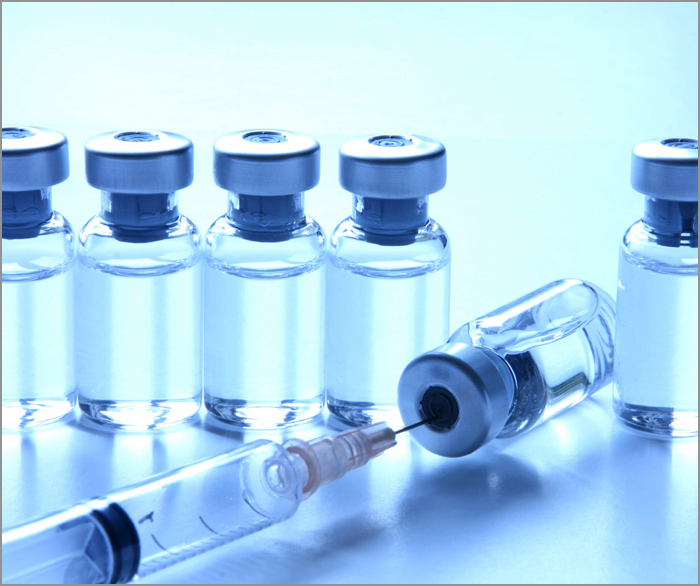
Image courtesy of newwilshire.com
But let's talk about the known risks and side effects of the influenza vaccine, a whole basket of toxic side effects - joint pain, swelling of the lymph nodes and inflammation of the blood vessels. Allergic reactions are also common - hives and anaphylaxis - and don't forget neurological disorders! Dr. Fuhrman goes on to explain that "Most recently, influenza vaccinations have been implicated as a trigger for Henoch-Schonlein purpura, a rare but serious disease that can cause kidney failure". 

Suddenly, getting a flu shot doesn't sounds like the best decision you've ever made.

The CDC now recommends a vaccination for all individuals six months or older. They back up their recommendations with numerous studies 'proving' the vaccination's ability to reduce the number of cases of the flu each year and it's ability to reduce complications related to the flu. The funny part is... when independent, non-biased analysis was conducted by the Cochrane Database of Systematic Reviews, they found these studies to be questionable at best, especially since most were funded by the vaccine companies themselves! And also worth noting is the fact that "almost all of the fifteen members of the CDC's Advisory Committee on Immunization Practices have financial ties to the vaccine industry!".

Image courtesy of humanitieswritlarge.duke.edu
Now let's look at the facts... more than 200 different viruses cause the flu. Each year the flu shot is designed after careful research determining which strains promise to be the most prevalent. The problem lies in the fact that this is a guessing game at best. Even with the most careful design, "the flu shot still covers less than 10 percent of the circulating viruses creating these illnesses. In the real world, the viral strains that are chosen for the vaccine simply cannot be an exact match with those circulating; only a partial match is ever achieved".

With this in mind, please understand that if you are making healthy choices and building a strong immune system through diet and exercise, you have no reason to fear the flu. But for those with compromised immune systems, the proposed benefits of the shot may far outweigh the risks. That is a personal decision that should be made after proper consideration and a consultation with your medical advisor.

If you'd like to ward off the flu in a more natural way, check out these 5 suggestions on Wellness Today!

So... there are the facts. Now it's time for you to decide what's right for you!


Monday, November 12, 2012

BOOM! POW! WHAM!: A Super Diet for Super Immunity

Image courtesy of hideyourarms.com
I spent the greater part of my weekend devouring a new book. It wasn't a trashy romance novel (although that could've been fun). No, I'm afraid to say I'm a bit obsessive when it comes to nutrition. My book of choice this weekend was a book on the immune system called Super Immunity by Joel, Fuhrman, M.D.

Courtesy of stmaartenlibrary.org
I bought this book because my goal this year is to change my body from the inside out. I've had various chronic issues my whole life, ranging from horrible allergies to annoying skin problems. It's time I put those to rest - for my own sanity's sake.

We all know that we should eat healthy, but are certain foods better for you than others? The answer is a resounding yes! Dr. Fuhrman advises building your diet around greens, onions, mushrooms, berries, beans and seeds. Let's take a look at each of these closely:

GREENS - There's a family of greens called cruciferous vegetables (coming from the Latin word 'crucifer', meaning 'cross'). Dr. Fuhrman explains that they 'have a unique chemical composition: they have sulfur-containing compounds that are responsible for their pungent or bitter flavors. When their cell walls are broken down by blending or chopping, a chemical reaction occurs that converts these sulfur-containing compounds into isothiocyanates (ITCs) - an array of compounds with proven and powerful immune-boosting effects and anti-cancer activity.' Cruciferous vegetables include the following: arugula, bok choy, broccoli, broccoli rabe, broccolini, Brussels sprouts, cabbage, cauliflower, collards, horseradish, kale, mustard greens, radishes, red cabbage, turnip greens and watercress.

I was pretty jazzed to see that this list contained almost all of my favorite vegetables! But then, my excitement reached a whole new level when he went on to cite the findings of multiple population studies - "Cruciferous vegetables are twice as powerful as other plant foods. In population studies, a 20 percent increase in plant food intake generally corresponds to a 20 percent decrease in cancer rates, but a 20 percent increase in cruciferous vegetable intake corresponds to a 40 percent decrease in cancer rates." If that's not enough reason to 'go green', I don't know what is.

www.oyetimes.com
ONIONS - We all know that onions make you cry. The enzyme alliinase, found in the cell walls, is the culprit, but the same chemical reaction that makes you cry when cutting an onion is actually allowing immune-building sulfide compounds to form. Those are actually tears of joy! Dr. Fuhrman explains that "these compounds prevent the development of cancers by detoxifying carcinogens, and they also...halt cancer cell growth by preventing tumors from obtaining a blood supply." It's not just onions that do the job though. Any member of the allium family will give you these benefits: garlic, leeks, shallots, chives or scallions. He suggests eating 1/2 cup of chopped onions per day to get maximum benefits.

MUSHROOMS - Your body contains natural killer T cells (NKT's for short). In addition to having an awesome sounding name, these cells have an incredibly powerful job within the body. They find damaged cells, attack and remove them. The compounds found in mushrooms (specifically white, cremini, portobello, oyster, maitake and reishi mushrooms) help to enhance the function of NKT's in your body, allowing them to do their job with much more power. Mushrooms also contain angiogenesis inhibitors, which keep new blood vessels from forming and allowing cancer it's own blood supply to grow.

BERRIES - Berries contain remarkably high levels of ellagic acid, which inhibits the formation of tumors. Berries are a super food for a reason because in addition to the ellagic acid, they also contain many other anticancer phytochemicals. Pomegranates are especially good for you. In addition to inhibiting tumor growth, they can lower blood pressure, prevent heart attacks and strokes, improve symptoms of depression, reduce tissue damage, and block the stimulation of breast cancer tissue from increased levels of estrogen. Did you hear that? Pomegranates are great natural tools in the fight against breast cancer!

Image courtesy of care2.com
BEANS - In addition to being low calorie and low in sugar, beans are packed with fiber, meaning you digest them slower and feel satisfied for longer. Beans are also extremely high in cancer-fighting antioxidants. According to webmd.com, "In a U.S. Department of Agriculture study, researchers measured the antioxidant capacities of more than 100 common foods. Three types of beans made the top four: small red beans, red kidney beans, and pinto beans. And three others -- black beans, navy beans, and black-eyed peas -- achieved top-40 status."

Image courtesy of en.wikipedia.org
SEEDS - Seeds are packed with protein and vitamin E. Natural vitamin E, present in the leaves and seeds of plants, is a major player in scavenging for cancer-causing free radicals and regulating immune system activity. The benefits of a vitamin E supplement do not even begin to touch the power of vitamin E in its natural form, obtained through seeds. Two major players are flax seeds and sesame seeds. Both of these seeds contain more lignans than any other food. Dr. Fuhrman explains that lignans work to "bind estrogen receptors and interfere with the cancer-promoting effects of estrogen on breast tissue and they also have strong antioxidant effects.... a study revealed that when flax seeds are given to women with breast cancer, the women show reduced tumor growth and enhanced survival, compared to women not given flax."

In just one weekend, I tackled the never-ending question of 'what to eat?'. If you can focus your meals around these 6 categories, then you can rest assured that you will be eating well - eating in a way that will pump up the power of your immune system and keep you healthy and cancer-free.

Try throwing some pomegranate seeds and flax seeds on your morning yogurt or cereal. Have a salad for lunch that incorporates sunflower seeds, mushrooms and cruciferous greens. Grab a burrito or burrito bowl and incorporate pinto or black beans into your lunch. For dinner, saute some greens and have a handful of berries for dessert. See? It's not hard. Your body will thank you and so will your boss (goodbye sick days)!