Showing posts with label vitamins. Show all posts

Wednesday, April 10, 2013

Vitamin D: Here Comes The Sun!

Image via dialvforvintage.blogspot.com
I've picked up a few nicknames in my time, most of them related to sun exposure. 'Big Red' and 'Lobster' were just a few of my favorite. One fateful day during my freshman year at Georgia, I fell asleep on the hill outside my dorm. What began as 15 minutes of innocent shut eye (quite possibly to avoid a study session) turned into a 2 hour (completely accidental) power nap on the quad in the sunshine, sans sunscreen.

When I woke up, I was aflame. I literally looked like a fire hydrant.

Image via savvyexaminer.com
The truth is... I'm pale. No matter how much I fantasize each summer season about having a tan, it isn't going to happen. Hell, I lived in Costa Rica for months and barely had a tan line. It's just my cross to bear.

But that won't keep me from enjoying my time in the sunshine (responsibly, of course)! In fact, we ALL should! With a little sunscreen slathered on for safe-keeping, you can get yourself some good old fashioned 'Vitamin D Therapy' on a sunny spring day.

Your body needs vitamin D for many reasons. The sunshine vitamin helps your body absorb calcium, which in turn keeps your bones and joints strong. But most importantly, vitamin D bolsters your immune system, keeping you healthy. Multiple studies have also pointed to the potential of vitamin D in preventing certain types of cancers, type 2 diabetes and heart disease.

It's important to make sure you are getting enough vitamin D each day, especially throughout the colder months, because vitamin D deficiency can cause issues in and of itself, including high blood pressure, severe asthma in young children and cognitive impairment in older adults.

Image via weightlossdietwatch.com
It only takes a little sun exposure each day to get your daily recommended amount the natural way, but if you live in a colder climate (or can't be in the sun as much as you'd like), supplementation is your next best option. I take anywhere between 1000-2000 IU of vitamin D3 per day. Many doctors, including Dr. Mark Hyman of the Institute for Functional Medicine, recommend this amount for daily maintenance. If you have a deficiency, you will most likely need more (as always, consult your physician if you are unsure of your particular needs).

And while it may seem easier to just drink a glass of vitamin D-fortified milk for your daily requirement, think again. According to Dr. Hyman, you would have to drink almost 20 glasses of milk a day to get the amount of vitamin D that your body requires each day.

So...

Milk, step aside!

Sunburns, be damned!

Who wants to catch some rays with me? It's finally warming up in the city!


Tuesday, January 15, 2013

Jammin' in the Kitchen: A Beet So Sweet!

Image courtesy of sunwarrior.com
Now don't think for a second that I didn't want to title this post 'Just Beet It' (I do love my Michael Jackson). But today's title was a bit more appropriate because beets are indeed sweet - satisfying any sweet tooth AND simultaneously providing you with amazing health benefits. They're quite the package deal! 

Beets originated along the Mediterranean and quickly spread throughout the world. This root vegetable, which comes in many lovely varieties (red, yellow, white... even red with white swirls), was used by the ancient Romans for its natural healing properties, in addition to its aphrodisiac properties. Like I said... quite the two-fer! 

In his book Food Rules, Michael Pollan says to 'Eat Your Colors'. What better way to do this than by adding the beautiful beet to your diet? Here's why you should just 'beet it'! (Ok, ok! I couldn't help myself!)...

Nature's Anti-Depressant - The tryptophan in beets helps to relax the mind and improve mental well-being. Plus beets are full of betaine, which is already used as a treatment for depression! I'll take my happy pill in the form of a beet, please!

Nature's Viagra - I'll cut right to the chase on this one. Beets have a high amount of boron, a trace mineral which aids in the production of human sex hormones. But that's not all, folks! The nitrate in beets helps to increase blood flow to the genital areas. Really, who wants to pay for Viagra (or therapy) when the answer can easily be found in the grocery aisle?!

Nature's Medicine - Beets are packed with vitamins and minerals - potassium, magnesium, fiber, phosphorus, iron, vitamin A, vitamin B, vitamin C, and beta-carotene, just to name a few. Plus the antioxidants in beets help fight chronic inflammation that could possibly lead to major health issues down the road, including cancer. Beets provide the perfect nutrient cocktail - one you don't have to feel guilty about throwing back with your friends!

Nature's 'Mama Bear' - As I've said before, natural folate is much preferable to taking a folic acid supplement, and beets are full of folate! Folate helps to protect the body's DNA, while also ensuring that your unborn baby arrives on the scene with no neural tube defects! That's a win-win, my friends!

Nature's Red Bull - Step away from the energy drinks! I have your answer right here! The nitrates in beets, which are converted to nitric oxide in the body, work to expand the walls of your blood vessels, allowing you more oxygen and more energy! Plus, beets are 'smart carbs', meaning that though they are high in sugar, they are low in calories. The sugar in a beet provides you with long-lasting energy without spiking your blood sugar levels, thanks to the fiber content that goes along with it. Eat a beet with your lunch and you'll be in business all afternoon (without even touching a Red Bull)!

So you see? Nature has a funny way of providing you with all the things you need to feel well! I like my beets in juice form or on a salad. Here's a simple recipe for a Massaged Kale and Beet Green Salad...

Grab your ingredients. One beet will be enough for a few servings, and the smaller the beet, the faster it cooks.
Trim the stem off 1 beet and rinse lightly under cool water to get any excess dirt off.
Place the beet in a saucepan of water and bring to a boil. Once the water is boiling, reduce the heat to medium and let
the water do its job.  A medium size beet will cook about 45 minutes.
Don't waste the beet greens! Wash and trim them while your beet cooks.
Then slice them into ribbons.
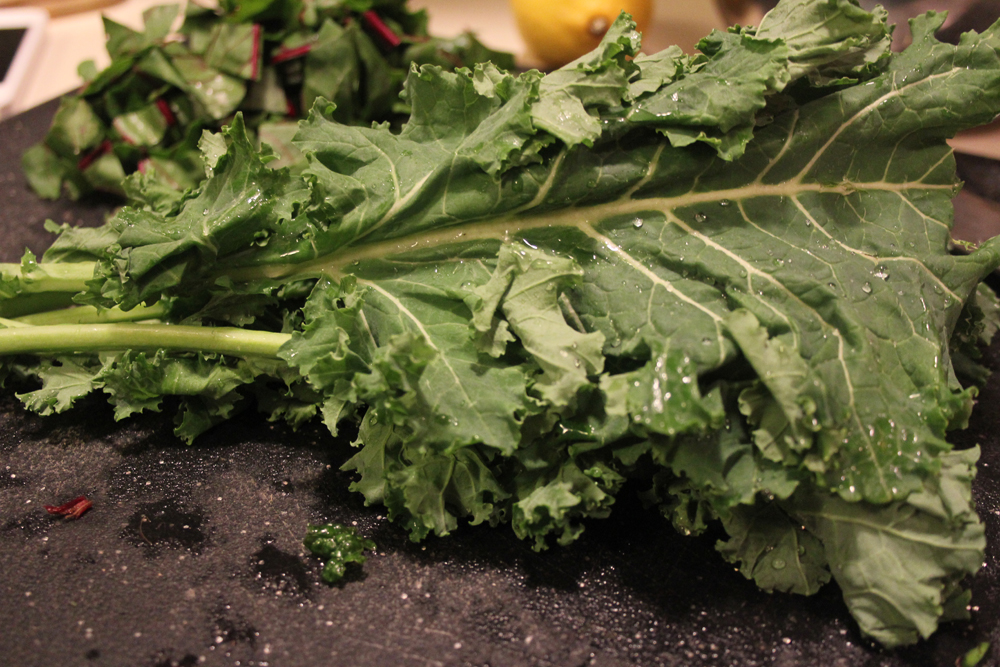
Now wash and pat the kale dry. Separate the leaves from the stems and chop into ribbons.
Check that hot beet out... it truly looks like Love Potion #9 in there!
In a large mixing bowl, combine the kale and beet greens. Drizzle lightly with extra virgin olive oil.
Now squeeze a lemon into the mix. Use just one half of it if you're making 2 servings. Use the whole lemon
if you're feeding a hungry family. At this point you can also sprinkle it with a little sea salt and pepper.
Now massage the mixture for 2-3 minutes until the leaves turn a darker shade of green. The salad will also
shrink a bit in size. Massaging the greens helps to activate more nutrients AND makes the raw greens a little
less bitter and tough.
Your beet is done when you can stick a fork in it easily. Remove it from the saucepan and transfer it to a bowl
of cold water. Gently rub the skin and it will come right off!
Now slice that beautiful beet...
...and add it to your salad. I also added toasted pumpkin seeds but any type of seed would compliment
this salad well (sunflower seeds, pecans, almonds, pine nuts)! Drizzle with your dressing of choice or whisk
the following together for a light yet tasty dressing: 1 shallot finely chopped, 1 1/2 Tbs. olive oil,
1 1/2 Tbs. balsamic vinegar, 1 Tbs. Dijon mustard, 1/2 tsp. garlic powder and sea salt
and black pepper to taste.

Wednesday, October 24, 2012

Under the Sea: Something Smells Fishy!

Image courtesy of explorechinatown.com
What I'm about to say pains me. I love seafood. Growing up, I spent summers in Destin, Florida, and you better believe I was munching on some fried shrimp, seafood gumbo and fresh fish. Today, I usually choose fish over meat when I have the opportunity and let me tell you, I go cuckoo for tilapia. Oh...and let's not forget blackened catfish Cajun-style. I die.

Image courtesy of barnesandnoble.com
My current read on the subway is Dr. Marion Nestle's What to Eat. If you've ever wondered about anything food-related, I can promise you this book will cover it. It's like the encyclopedia of eating...a college education in nutrition wrapped up in a paperback (though as heavy as a hardback, be forewarned). As far as food education goes, this book has given me more knowledge in the past few weeks than I've acquired in a lifetime. Pick it up next time you're in Barnes and Noble or cruising the wares on Amazon.com.

Dr. Nestle devotes 5 chapters of her book to fish - fish safety, fish consumption, fish politics - all the fishy things your heart might desire. I'm here today to give you a quick overview... get the wheels turning, if you will.

It's no doubt that fish is good for you. It provides a lean source of protein, is packed with vitamins and minerals and houses those heart-healthy fatty acids that we keep hearing so much about. So what's the big deal about fish? Why should we be concerned? Are pregnant women the only ones that need to keep an eye on their consumption?

In a perfect world, yes... but it's time we took a closer look at the fish we eat because we all know that the world is far from perfect. Politics play a huge part in what you eat.

The biggest concern related to fish is the level of toxins you ingest when eating it, more specifically, the levels of methylmercury and polychlorinated biphenyls (or PCBs), which can both cause neurological problems and many other health issues. As far as mercury goes, most of the emissions in the United States come from coal-fired power plants and mining operations. The toxins run off into the waterways. Sadly, you'd be hard pressed to find a clean body of water in the United States as it stands today. Toxins builds up in the tissue of the fish that are exposed to it, so the larger the fish, the higher level of toxin presence. Shellfish and other small fish like anchovies, trout and flounder have the lowest levels of toxins, while bigger fish like tuna, swordfish and mackeral fall on the other end of the toxicity spectrum. 

Fish industry advocates and even the government will tell you that there is a certain level of toxins you can ingest safely - you just need to watch your consumption. Does this sound like an oxymoron to anyone else? A safe level of toxins?

Image courtesy of epguides.com
Dr. Nestle compares the supermarket fish counter to the Wild Wild West. Fish regulations in the United States are sub-par at best - labeling is often wrong and affordable, safe choices are hard to come by. One of the huge problems with fish regulation is that it's divided between 4 federal agencies - the USDA for marketing, the National Oceanic and Atmospheric Administration for ocean fisheries, the EPA for fish caught for sport and recreation and the FDA for fish safety. Wouldn't it be much easier if one agency regulated the industry? With this sort of system, some safety concerns inevitably fall through the cracks, and that's something you, my friend, should be concerned about.

For one, did you know that farm-raised salmon - which comprises about 80% of total salmon for sale in the US - is dyed to meet your standards of how a salmon filet should look? Would you buy a grey-colored piece of salmon at the grocery store? Probably not. Well, farm-raised salmon are grey because they are not fed their natural diet. Salmon in the wild eat marine krill, which are small crustaceans containing the beautiful pink pigment that gives salmon it's color. But when salmon are farm-raised, they are fed pellets (much like dog or cat food pellets); therefore, their skin is not a natural color. How does the industry solve the problem? Oh, that's easy! They resort to cosmetics!

Salmon isn't the only fish receiving a makeover... tuna falls into that category too. Tuna has become so popular in recent years that it's greatly overfished and very hard to provide to you in the store at peak condition. Tuna naturally turns chocolate brown the longer it's out of the water and since consumers probably won't get excited about buying brown tuna, the industry responds by spraying it with carbon monoxide - this prevents and also reverses discoloration. But is it good for you?

Image courtesy of care2.com
Now let's talk about fish imports. Much of our fish comes from overseas, especially when it comes to the frozen fish section of your local grocery store. It's widely known that fishing practices and regulations overseas are not as good as you'd prefer them to be. For example, in China, fish farms often feed the fish chicken waste and HUMAN waste. Sounds like a recipe for disease if I've ever seen one. To keep disease at bay, farmers pump their fish full of antibiotics before they end up in your grocery store. Need I say more?

Obviously, I haven't even begun to touch on the topics that Dr. Nestle covers in her book What to Eat, but hopefully these quick points will give you the desire to become more aware of the fish you consume and even the politicians that you choose to elect. Many of the fish problems we face boil down to lack of environmental regulations from government. When you become more informed, you can feel good about stepping up to the fish counter or ordering that salmon filet at dinner.

For more in-depth explanations of fish industry concerns, I recommend picking up a copy of Dr. Nestle's book. It's not really a poolside read, but it's not a college Calculus book either. She does have a sense of humor about these things...and thank God for that, or you'd be running to the hills, growing your own food and avoiding grocery stores altogether.

For more detailed info on tuna and carbon monoxide, click here.

To hear what Dr. Nestle has to say about supermarket sushi, click here.