Showing posts with label energy. Show all posts

Tuesday, October 1, 2013

Sharing Secrets over at The Samana Project!


Energy can be elusive. And we're all searching for it, aren't we? I mean... hello, never-ending Starbuck's line! I've battled energy issues for as long as I can remember, but this year something clicked and I decided I was SICK AND TIRED of being sick and tired!! As a result, I've spent the last few months trying many different things in hopes that I could finally crack the energy code for myself... and for you!

Today, Julie over at The Samana Project invited me onto her blog to share my secret, tried-and-true energy cocktail. If you're in need of a natural boost, head on over and check it out here!

And while you're there, check out what Julie's up to! A Clean Living Retreat in Costa Rica? Sign me up!

post signature

Thursday, June 6, 2013

Energize Your Life With Me on Wed, June 12th!

When life starts to feel like this...


But you'd prefer it feel like this...


Join me for a workshop on Eating for Energy next Wednesday, June 12th from 7-8 pm at Freshmade NYC!

I will reveal ALL my energy secrets and when you leave, I promise you'll feel rejuvenated and alive.

Kinda like...


To register, click here:


Can't wait to see your beautiful faces!

post signature

Saturday, April 20, 2013

Beat Your Fatigue Naturally: Eating for Energy!

Eating for Energy

Hello, lovely readers! 

I know it's a bit early, but I'm just so excited that I can't keep it to myself. I'd like to invite you to join me for my next workshop, 'Eating for Energy', in New York City this June! If you feel like you're always burning the candle at both ends, I am down on my knees begging you to give this gift to yourself (don't make me beg). We will be discussing the hidden 'energy zappers' in your life, exploring ways to nourish your body and mind through food (you get to taste test too!) and discussing the minor changes you can make to fuel your busy life!

WHERE? Freshmade NYC, 636 Broadway (at Bleecker Street), Suite 516
WHEN? Wednesday, June 12th from 7-8 pm
HOW MUCH? $35

Click here to reserve your spot! I can't wait to see you!


post signature

Friday, February 22, 2013

The Experts Weigh In: Eating for Fuel


BY: MARY DOYLE

I feel like I’m living a double life - a double exercise life. My gym routine and my running routine are at odds with each other. Well, actually, it’s just my gym routine that has beef with my running routine (my running routine is secretly in love with my gym routine because she makes me faster on the pavement). Oh, unrequited love.

For the past 15 months I’ve worked rigorously with a trainer who has a strong belief that high protein and low carbs - paired with heavy weight lifting endurance sets (think Crossfit, Tabata, RFT, AMRAP) - are the key to being in the best shape of your life. Her workouts and methodology helped me shed 10 pounds and 5% body fat in the first 6 months (and maintain it).

For the past 8 months I’ve ALSO been hitting the pavement for long runs, increasing my mileage and building towards a goal. That goal? Running a marathon! During my training, as my weekly mileage increased, so did my carbohydrate intake.

Therein lies my exercise dilemma: carbs are both the key to having the energy to run AND the nemesis to fighting off fat storage.

Before I began training for my first marathon, eating during exercise had never crossed my mind. In fact, during and after workouts, food is the last thing on my mind. I remember orange slices during half time at youth soccer games, but I always thought that was just for extra hydration. The only thing palatable after a workout for me was watermelon or pineapple – or even better, a big glass of water.

But when my casual weekday runs transitioned into training for a marathon, new research and conversations with fellow runners brought the concept of fueling during a run to my attention. It seemed so odd. Here I thought I was simply building endurance to get myself to mile 8, 12, 16….26.2. Come to find out, there’s a whole science behind it. Here’s the breakdown…

Carbohydrates = Sugar

Sugar stored in the body = Glycogen

Glycogen = Energy

Our glycogen levels are what fuels us for our daily activities, especially high-intensity and aerobic training, like running. According to the National Institute for Sports Professionals, an athlete stores about 2 hours worth of glycogen to use for high-intensity training.

For me, this means I can run just under 14 miles on all the glycogen stores in my body. After that, I'm literally running on empty. I'm no 'Boston Qualifier' at this point, so that leaves me nearly 2 more hours of running that I'll have to fuel for while I run. But do I really want to let the tank hit empty before I start refueling? Most definitely not! Especially when precious seconds-per-mile mean the difference between making and missing the goal I've worked towards for months.

I've found that many long distance runners follow the 75 minutes rule. While your body has enough glycogen stores for 2 hours of running, you'll need to have something left in the tank when you hit that 2 hour mark so your system has time to absorb the fuel you provide.

Image via ebay.com
Many products (like energy gu's or gels) say to refuel every 45 minutes of exercise. Much like the chart on the back of your dog's food bag, this is excessive and will leave you with a fat dog and a light wallet. My ultimate goal in refueling is to stay in the positive, but not to carry more than I need. With my frame and pace, I find that 100 calories of carbohydrates (about 25 grams) is sufficient to fuel me for an additional 6 miles after the first 75 minutes. For a marathon, this means taking an Energy Gu at mile 8, mile 14 and mile 20. Any carbs consumed after mile 20 won't be absorbed in time to help me during the race (Vanilla Bean Gu and Strawberry Clif Shot Bloks are my fuel of choice. They work best with my taste buds and sensitive tummy).

With that said, it is a myth that carb loading before a big event is necessary to have the energy you need. Your body only stores so much glycogen, then turns the leftover supply to fat. Unless you just finished a long workout and haven’t eaten anything, you have all the glycogen you need stored in your muscles already.

I struggled to find the delicate balance between having enough carbs (glycogen stores) in my system to be prepared for a race and enough self-control to not load up on more than I needed. I’ve found that eating my normal high protein, low carb diet in the days before a race is sufficient to power me through that first 75 minutes of a challenging run. From there, I must replenish with simple carbs to finish the race feeling strong.

I’ve come to embrace running fuel as that ever-so-rare sweet treat that I need (and work hard for!). It may look like an indulgence, but it’s exactly what my body needs to finish the race strong. Training for my marathon helped me accomplish so many goals – looking and feeling the best that I can, pushing the boundaries of what my body can do, and above all, being the healthiest me that I can be. I was able to do all these things because I put aside the fear of carbs and listened to what my body needed to make my goals a reality.

Sources:


Mary Doyle has a few confessions... she brushes her teeth in the shower just to get a few extra minutes of sleep in the morning, she would willingly run a marathon every weekend if you let her (what is she... crazy?) and she's a textbook Gemini - either meticulously counting calories OR shoveling down cupcakes like there's no tomorrow! Mary has a shameless love affair with the great outdoors... she loves hitting the pavement for a run, cruising up and down the beach on her bike or relaxing in the sand with a magazine. Oh... and don't cross her with your bag of potato chips. Mary's biggest pet peeve is (in her own words) "listening to someone eat potato chips. The 'chomp, chomp' is worse than nails on a chalkboard. I don't like the texture of potato chips or the way they stick in my teeth. When hearing this sound, I can feel the texture and grit, and I cringe with disgust and have to leave the room". So basically... don't invite Mary to your next BBQ, but if you're looking for a running buddy, she's definitely down! Oh... and Mary has her own blog called Running and Losing. Check it out and show her some love!


P.S. I am taking submissions for Operation Snail Mail through the end of the day today. Don't miss out on this amazing project! To learn more, click here!

Tuesday, January 15, 2013

Jammin' in the Kitchen: A Beet So Sweet!

Image courtesy of sunwarrior.com
Now don't think for a second that I didn't want to title this post 'Just Beet It' (I do love my Michael Jackson). But today's title was a bit more appropriate because beets are indeed sweet - satisfying any sweet tooth AND simultaneously providing you with amazing health benefits. They're quite the package deal! 

Beets originated along the Mediterranean and quickly spread throughout the world. This root vegetable, which comes in many lovely varieties (red, yellow, white... even red with white swirls), was used by the ancient Romans for its natural healing properties, in addition to its aphrodisiac properties. Like I said... quite the two-fer! 

In his book Food Rules, Michael Pollan says to 'Eat Your Colors'. What better way to do this than by adding the beautiful beet to your diet? Here's why you should just 'beet it'! (Ok, ok! I couldn't help myself!)...

Nature's Anti-Depressant - The tryptophan in beets helps to relax the mind and improve mental well-being. Plus beets are full of betaine, which is already used as a treatment for depression! I'll take my happy pill in the form of a beet, please!

Nature's Viagra - I'll cut right to the chase on this one. Beets have a high amount of boron, a trace mineral which aids in the production of human sex hormones. But that's not all, folks! The nitrate in beets helps to increase blood flow to the genital areas. Really, who wants to pay for Viagra (or therapy) when the answer can easily be found in the grocery aisle?!

Nature's Medicine - Beets are packed with vitamins and minerals - potassium, magnesium, fiber, phosphorus, iron, vitamin A, vitamin B, vitamin C, and beta-carotene, just to name a few. Plus the antioxidants in beets help fight chronic inflammation that could possibly lead to major health issues down the road, including cancer. Beets provide the perfect nutrient cocktail - one you don't have to feel guilty about throwing back with your friends!

Nature's 'Mama Bear' - As I've said before, natural folate is much preferable to taking a folic acid supplement, and beets are full of folate! Folate helps to protect the body's DNA, while also ensuring that your unborn baby arrives on the scene with no neural tube defects! That's a win-win, my friends!

Nature's Red Bull - Step away from the energy drinks! I have your answer right here! The nitrates in beets, which are converted to nitric oxide in the body, work to expand the walls of your blood vessels, allowing you more oxygen and more energy! Plus, beets are 'smart carbs', meaning that though they are high in sugar, they are low in calories. The sugar in a beet provides you with long-lasting energy without spiking your blood sugar levels, thanks to the fiber content that goes along with it. Eat a beet with your lunch and you'll be in business all afternoon (without even touching a Red Bull)!

So you see? Nature has a funny way of providing you with all the things you need to feel well! I like my beets in juice form or on a salad. Here's a simple recipe for a Massaged Kale and Beet Green Salad...

Grab your ingredients. One beet will be enough for a few servings, and the smaller the beet, the faster it cooks.
Trim the stem off 1 beet and rinse lightly under cool water to get any excess dirt off.
Place the beet in a saucepan of water and bring to a boil. Once the water is boiling, reduce the heat to medium and let
the water do its job.  A medium size beet will cook about 45 minutes.
Don't waste the beet greens! Wash and trim them while your beet cooks.
Then slice them into ribbons.
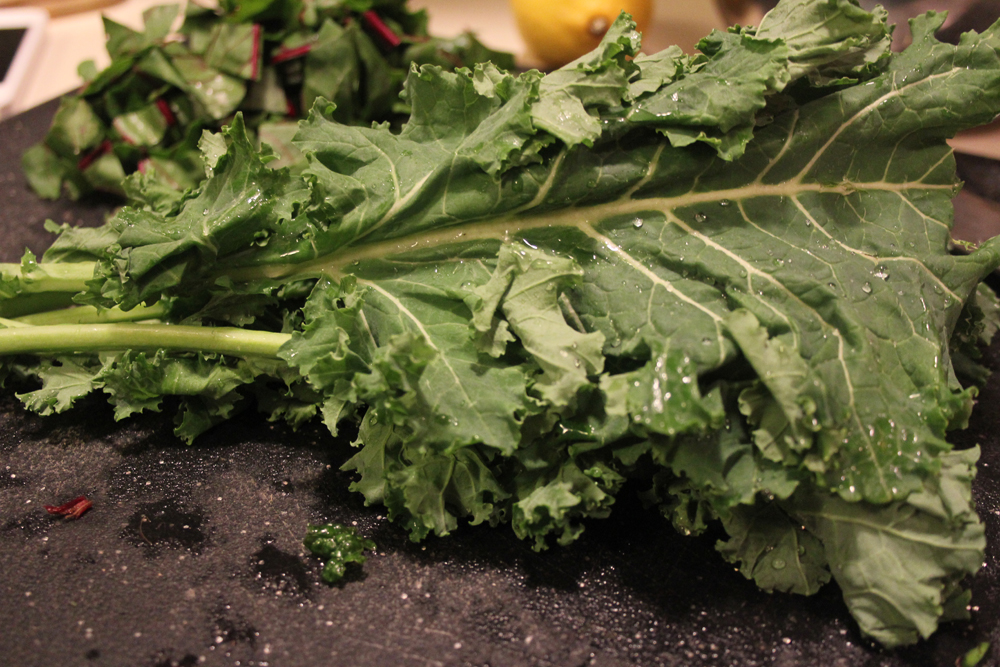
Now wash and pat the kale dry. Separate the leaves from the stems and chop into ribbons.
Check that hot beet out... it truly looks like Love Potion #9 in there!
In a large mixing bowl, combine the kale and beet greens. Drizzle lightly with extra virgin olive oil.
Now squeeze a lemon into the mix. Use just one half of it if you're making 2 servings. Use the whole lemon
if you're feeding a hungry family. At this point you can also sprinkle it with a little sea salt and pepper.
Now massage the mixture for 2-3 minutes until the leaves turn a darker shade of green. The salad will also
shrink a bit in size. Massaging the greens helps to activate more nutrients AND makes the raw greens a little
less bitter and tough.
Your beet is done when you can stick a fork in it easily. Remove it from the saucepan and transfer it to a bowl
of cold water. Gently rub the skin and it will come right off!
Now slice that beautiful beet...
...and add it to your salad. I also added toasted pumpkin seeds but any type of seed would compliment
this salad well (sunflower seeds, pecans, almonds, pine nuts)! Drizzle with your dressing of choice or whisk
the following together for a light yet tasty dressing: 1 shallot finely chopped, 1 1/2 Tbs. olive oil,
1 1/2 Tbs. balsamic vinegar, 1 Tbs. Dijon mustard, 1/2 tsp. garlic powder and sea salt
and black pepper to taste.

Monday, October 8, 2012

Honey: The Sweetener That's Good for You!

Image courtesy of fyeahchemistry.tumblr.com
Honey, I'm here today to tell you that not all sweeteners are bad! That's great news, especially if there's a bear-shaped squeeze bottle in your kitchen within reach! 

There are mentions of honey dating back to 8,000 B.C., in cave drawings near Valencia, Spain. In ancient Egypt, honey had many uses - as a sacrifice to the gods, as an embalming fluid for the dead, and as a moisturizing bath (when combined with milk) for the infamous Cleopatra. You can also find honey referenced in many religions, including Hinduism, Islam, Christianity, Judaism and Buddhism. The ancient Romans used honey in their cooking, while the feudal system in Europe used it as currency. In the Ayurvedic tradition in India, honey was considered a natural remedy. 

Honey has been around a long time and it's no wonder why it's so integral to human existence. Honey possesses antifungal, antibacterial, antiseptic and antioxidant properties that can...

Image courtesy of allfloridabeeremoval.com
BOOST YOUR IMMUNE SYSTEM - Honey is largely composed of fruit sugars, but it also contains B vitamins, amino acids, enzymes, minerals and antioxidants - all very integral to your body's success in fighting infection and disease.

FIGHT ALLERGIES (OR SO THEY SAY) - Some studies support the idea that honey from your local area can help fight the symptoms of allergies and hay fever. It's the same concept of being injected with a mild version of the flu virus when getting a flu shot. It allows your body to build immunity.

HEALS MINOR CUTS & BURNS - Because honey has antibacterial properties, it works to prevent infection and decrease inflammation. Honey is a humectant, which means it draws moisture in from the air, allowing your injury to heal properly without leaving a scar.

KEEP YOUR SKIN YOUNG AND FRESH - Because honey draws moisture to the skin, it can be substituted for all those fancy and expensive skin creams. Lightly wet your fingers, dip them into 2-3 Tbs. of raw honey and spread a thin layer over your face for 10 minutes. Afterwards, wash the honey off with water (avoiding soap) and layer your dry face with moisturizer to lock in the benefits.

PROVIDE YOU WITH ENERGY - The glucose in honey is absorbed quickly into your bloodstream, giving you an instant energy boost. Meanwhile, the fructose content sustains your energy for an extended period as it is absorbed more slowly.

SOOTHE A COUGH - Honey helps mask the 'tickle' that causes you to cough. Try drinking honey in your tea or in a cup of warm water with lemon.

PROVIDE YOU WITH PROBIOTICS - Probiotics are live microorganisms that ensure the microbial balance in your intestines (think yogurt or other fermented foods with active cultures). Probiotics can help relieve digestion issues or chronic intestinal inflammatory diseases.

HELP WITH A HANGOVER - Honey accelerates the oxidation of alcohol in the liver, helping you recover from that 'big night out' much faster than usual.

**PLEASE NOTE: You should never feed honey to infants under the age of 12 months. Honey is the only known dietary source of C. botulinum spores, which can cause botulism (a rare and sometimes fatal paralysis) in small children who's intestinal systems have not yet matured.**


Last week, I pulled a recipe out of the archives - Honey-Jalapeno Chicken with Sesame Noodles. I don't even remember where I found this (my sincerest apologies to the culinary genius behind it), but it's fantastic! It's the perfect light dinner and it makes just enough leftovers to take to work the next day or two for lunch! It makes approximately 3-4 servings.

Cook 12 oz. of soda noodles (or any other Asian noodle like udon) according to package directions, drain and set aside.
Now for the prep: Chop 1 bunch of scallions (green part only) to fill 1/4 cup.
Finely chop 1/4 cup fresh cilantro.
Remove the seeds of 1 jalapeno and finely chop.
Grab some pickled ginger, which you can find in the grocery store's Asian food aisle.
Finely chop 2 Tbs. of pickled ginger.
Pour 2 tsp. of olive oil into a preheated skillet. Add 1 lb. or so of organic chicken (cut into 1/2 inch pieces),
the jalapeno, and the cilantro. If you don't have time to cook the chicken, then just
buy a rotisserie chicken from the store and use half of it (shredded). Cook over medium-high heat.
Now grab your seasoning. Add 1/2 tsp. salt and 1/2 tsp. pepper.
When the chicken is about halfway cooked (like so), pour in 1/3 cup honey. 
Meanwhile, pour 3 Tbs. soy sauce and 2 tsp. sesame oil over the cooked noodles. Also mix in the scallions and ginger.
To get the chicken nice and brown, drain some of the liquid that's in the bottom of the skillet. I usually add more honey
here so that the chicken has a nice, bold flavor. When the chicken are browned slightly and cooked through (about
10-12 minutes), remove from heat, drain the excess liquid in the pan and pour over the noodle mixture.
Mix everything together and if you feel that the noodles need a little extra soy sauce and
sesame oil, don't be shy! This dish is a taste bud tantalizer!

Thursday, September 20, 2012

Food Rules: Put A Fork In Me, I'm Done!

Image courtesy of killough.us
We've all been there. I'm talking about the point of no return - the moment at dinner when you find yourself slipping your hand underneath the table to release the top button of your pants. Phew. Much better. It happens to the best of us. Sometimes the food's just so good (and/or so expensive) that you find yourself in a competition with yourself to wipe that plate clean. Culinary domination complete!

The good news? The food was fantastic and you conquered it... all.
The bad news? You're uncomfortable and beelining for the nearest mattress store with your pants around your ankles.

Drastic times call for drastic measures. I think it's time for some good old fashioned waistline therapy. Let's dive into the next guideline from Michael Pollan's book Food Rules...

STOP EATING BEFORE YOU'RE FULL

It's not our fault that we don't innately know this. We grew up being told, 'clean your plate' or 'eat all your vegetables'. Our mothers and fathers meant well. They wanted us to get our fair share of nutrients AND they believed in the concept of avoiding waste. There are starving children in Africa, Lauren... finish your peas!

Image courtesy of thedailygreen.com
The only problem with this child-rearing technique is that it sets the tone for how we relate to food as adults. Unfortunately, as the portion sizes in restaurants grow larger by the day, so do our waistlines AND our stomachs. Overeating can stretch your stomach up to 20%, and it doesn't just snap right back to business as usual. The next time you sit down to eat, it will take more food to feel full. You can see how this pattern could easily get out of hand.

Image courtesy of wawaza.com
The purpose of food is to provide your body with energy. When you overeat, you feel the opposite of energized - you feel lethargic. You crave a nice long nap. Your brain feels fuzzy. It becomes hard to concentrate. You might even feel discomfort or pain. None of these things are natural or good.

The Japanese have a saying - hara hachi bu - which advises people to stop eating when they are 80% full. In India, there's a common belief that you should stop eating when you are 75% full. In China, they say 70%. Moral of the story? No matter what the percentage, you should be so aware of your body that you stop eating when you no longer feel the physical pangs of hunger. You'll know you've reached this point because you'll start to feel content, your food may start to taste less interesting than it did on the first few bites and you might even become distracted, thinking about the next thing on your to-do list. Some people even let out a 'sigh' of satisfaction when they've reached that 80% mark.


Here are a few tips to help you implement this concept...

1) Eat slower - Give your stomach the time it needs to send the message to your brain that you're satisfied. If you scarf down your food, then you will stretch your stomach long before you ever get the message.

2) Concentrate - Turn the TV off and put the computer away. When you take the time to fully focus on your meal, you will be able to savor every bite. When you're distracted by an outside stimulus, you forget to enjoy each bite, and you may end up going back for seconds just to get that feeling of satisfaction.

3) Drink water before a meal - Your mind often mistakes thirst for hunger. Before a meal, drink 1 glass of water to hydrate, then you'll be able to accurately identify when you've reached that 80% mark.

If you can follow these 3 simple steps, you just might be able to wear your skinny pants to dinner without despair, rid your closet of all the muumuu-style dresses and say goodbye to those awful stretchy waistbands!

Now wouldn't that feel therapeutic?


Tuesday, September 18, 2012

Sweet Potatoes: There's Nothing Finer In All The Land!

Image courtesy of ecosalon.com
My paternal grandparents are excellent cooks. They're what you call 'old school'. I remember going to visit and waking up to the smell of biscuits wafting through the air. These weren't just any old biscuits either. These were the made-from-scratch variety, topped with strawberry jam that Big John had canned himself. To this day, no biscuit has ever held a candle to the ones from my childhood. Big John also grew a lavish garden in the backyard, with everything from muscadine grapes to fresh tomatoes, green beans and squash. As I child, I didn't appreciate the easy access to locally grown vegetables because it meant I had to eat more vegetables (boo), but now I find myself dreaming of having fresh garden picks so readily available (mmm).

Big John and Grandma (over 60 years ago)
Because veggies weren't at the top of my wishlist at the time, my grandparents had a deliciously sneaky way of tricking me into eating them. They'd serve me sweet potatoes, souffle style. Now, we could easily make a list of reasons why you shouldn't eat sweet potato souffle (with the excessive sugar content taking the #1 spot), but I'd like to argue that I could have been eating worse things - like a bag of Doritos or a slice of pizza. Eating sweet potato souffle made me open to the idea of sweet potatoes in general, and by golly, I liked them!


Sweet potatoes are a superfood, and while not quite 'as super' with sugar piled on them, they still have amazing health benefits and should be a part of your diet! Let's take a look at why sweet potatoes should be at the top of your shopping list...

COMPLEX CARBOHYDRATES - Sweet potatoes are packed with complex carbs, which your body uses for energy. The energy in complex carbohydrates is released at a steady pace, making this a great vegetable for those with blood sugar issues.

BETA CAROTENE & VITAMIN A - If you eat a medium sized sweet potato (with the skin), you're consuming 4x the recommended daily value for beta carotene. Beta carotene is your body's main source of vitamin A, which plays a huge role in immune system function and healthy skin, eyes and bones.

FIBER - Sweet potatoes are packed with fiber (even more so when the skin is left on). Fiber keeps your digestive system working properly and can help prevent constipation and colon cancer.

POTASSIUM - The potassium in sweet potatoes works to prevent heart disease, maintain fluid and electrolyte balance, prevent muscle cramps and injuries, and keep the body balanced under stressful conditions.

ANTIOXIDANTS - Sweet potatoes are extremely rich in antioxidants, which fight cancer-causing free radicals and prevent inflammatory problems within the body.

FOLATE - Pregnant women especially need folate to ensure proper development of the fetus. Sweet potatoes are a great way to satisfy that need and indulge in something sweet that's healthy too!

VITAMIN C - A medium sweet potato fulfill's 1/3 of your daily value for Vitamin C, which helps keep your immune system strong and assists in iron absorption.

Image courtesy of midajyf.comze.com
Now I'll spare you the image of me in a sombrero dancing to the Macarena. Instead, I'll act like my age and tell you that I was silently ecstatic when my friend Katie Chabalko introduced me to this recipe combining my first love Mexican with my second love sweet potatoes. Also worth noting: Adam (the meat eater in this relationship) scarfed them down like they were filled with steak. I consider that a small success on my part!

Many thanks to Naturally Ella for this amazing recipe - Chipotle Sweet Potato, Black Bean & Guac Tacos. Once you get through the process of chopping, this is easy to throw together in a flash!


Here's my step-by-step photo version (because I'm not one to measure, you should reference the original recipe for exact measurements)...


Start with the guacamole (this can be prepared ahead of time to speed up things after work). Scoop out the inside
of the avocado and mash in a mixing bowl until it's the consistency you like. Chop the onion and garlic and add
to your avocado mixture.
For a little kick, dice the serrano pepper (or leave this step out if you can't handle the heat). 
Dice the tomato.
Wash and chop the fresh cilantro. Set some whole cilantro leaves aside to garnish the tacos later.
Add the lime juice and salt and pepper to taste. Sea salt gives it a little something extra!
My best guac attempt to date! Now put in the refrigerator for later. Onto the taco filling...
Peel your sweet potatoes (or be awesome and go all in with the skin). Then cut them into small 1/2" squares.
(Apparently, I can't judge measurements and mine were too big. The smaller the better so they'll cook faster).
In a nonstick skillet over medium heat, saute the onions in a little olive oil until they start to soften.
Next, add the sweet potatoes and saute 3-4 minutes on medium-high heat until they begin to soften.
While the sweet potatoes are cooking, grab your sauce ingredients...
...and combine them in a separate bowl.
Pour the sauce over the sweet potato mixture...
...and then pour in the black beans. Turn the heat down to low-medium and continue to cook until the
potatoes are soft and ready to eat.
Fill the taco shells with a generous helping of guacamole, add the sweet potato mixture and garnish with cilantro.
No hot sauce or salsa needed... these things pack a surprising flavor punch!

If you're not keen on the idea of a sweet potato taco, here are a few more recipes to get you going...

Sweet Potato Cream Pasta with Crispy Kale


Healthy Baked Sweet Potato Fries