Showing posts with label folate. Show all posts

Wednesday, February 27, 2013

Snack Attack: 'Snip Chips!


If you live in New York, then there's a good chance you've contemplated moving to the Bahamas in the last few weeks. I know I have! It's been F-R-I-G-I-D here, and when it's not frigid, it's rainy. I mean, I'm wearing a thick hooded coat and carrying an umbrella, and I'm still wet and cold. For me, the only positive side of winter is the rosy glow it gives to my cheeks. Beyond the natural beauty assistance, I'm over it. 

When the weather's chilly and I'm looking to heat things up in the kitchen, I grab some root vegetables! Root vegetables are some of the best foods for warming up your body and feeling grounded during the long, cold winter season. My longtime favorite root vegetable used to be the sweet potato, but these days I have my sights set on the parsnip. 

Image via parsniprecipes.co.uk
Here's why you should snack on a 'snip...

LOW CAL - One cup of parsnips is just over 100 calories. It's a sweet snack without the excess baggage! 

FIBER - Parsnips contain both soluble and insoluble fiber, helping to lower your cholesterol, regulate your blood sugar and keep things moving! 

POTASSIUM - The potassium in parsnips works to maintain your tissues and organs, helps send nerve signals and also aids in the metabolizing of protein. 

VITAMIN C - Parsnips are a natural immune system booster! Plus, the vitamin C they contain helps your body absorb iron and aids in the formation of collagen.

FOLATE - Eating parsnips can help protect your unborn child from birth defects, while also lowering your blood homocysteine levels, helping to prevent disease.

See? It's a smart snack AND a snack you can make yourself!

Just in time for this post, I stumbled across the most glorious blog - Good Things Grow - and was inspired to try Jacqui's recipe for Parsnip Chips, which I've affectionately shortened to 'Snip Chips! Head on over to her blog for the full recipe, but if you'd like the quick rundown play-by-play style, here's my attempt!

Happy Snacking!

Heat the oven to 475 degrees. Grab as many parsnips as you want chips (3 small-medium sized parsnips yielded me a cereal size bowl of chips). Wash them and peel the outsides like you would a potato.
With a mandolin or a very sharp knife, slice your chips very thin. The thinner the better!
Now pat them dry with a paper towel to remove any excess perspiration.
In a pan, melt 2 Tbs. (or more if you're making a larger batch) of organic virgin coconut oil. We're using coconut oil because it has a much higher smoke point than olive oil. You can find it at Trader Joe's for about $6/jar.
In a large mixing bowl, drizzle the melted coconut oil over the chips and toss gently with your hands to spread evenly.
Now toast 1 tsp. of fennel seeds over medium-high heat (this should only take a couple of minutes)...
...then grind or crush the fennel seeds.
In the same bowl, add 1/2 tsp. each of ground cumin, chili powder, paprika and black pepper.
Mix the spices together and toss evenly onto the chips in the mixing bowl.
Now roast the chips on an ungreased baking sheet for 15-20 minutes, flipping the chips halfway in and at the same time, moving the pan from the top rack of the oven to the bottom rack. You have to watch them very carefully, as they burn easily!
Let them cool for a few minutes, then dive into your homemade, healthy snack!

Tuesday, January 15, 2013

Jammin' in the Kitchen: A Beet So Sweet!

Image courtesy of sunwarrior.com
Now don't think for a second that I didn't want to title this post 'Just Beet It' (I do love my Michael Jackson). But today's title was a bit more appropriate because beets are indeed sweet - satisfying any sweet tooth AND simultaneously providing you with amazing health benefits. They're quite the package deal! 

Beets originated along the Mediterranean and quickly spread throughout the world. This root vegetable, which comes in many lovely varieties (red, yellow, white... even red with white swirls), was used by the ancient Romans for its natural healing properties, in addition to its aphrodisiac properties. Like I said... quite the two-fer! 

In his book Food Rules, Michael Pollan says to 'Eat Your Colors'. What better way to do this than by adding the beautiful beet to your diet? Here's why you should just 'beet it'! (Ok, ok! I couldn't help myself!)...

Nature's Anti-Depressant - The tryptophan in beets helps to relax the mind and improve mental well-being. Plus beets are full of betaine, which is already used as a treatment for depression! I'll take my happy pill in the form of a beet, please!

Nature's Viagra - I'll cut right to the chase on this one. Beets have a high amount of boron, a trace mineral which aids in the production of human sex hormones. But that's not all, folks! The nitrate in beets helps to increase blood flow to the genital areas. Really, who wants to pay for Viagra (or therapy) when the answer can easily be found in the grocery aisle?!

Nature's Medicine - Beets are packed with vitamins and minerals - potassium, magnesium, fiber, phosphorus, iron, vitamin A, vitamin B, vitamin C, and beta-carotene, just to name a few. Plus the antioxidants in beets help fight chronic inflammation that could possibly lead to major health issues down the road, including cancer. Beets provide the perfect nutrient cocktail - one you don't have to feel guilty about throwing back with your friends!

Nature's 'Mama Bear' - As I've said before, natural folate is much preferable to taking a folic acid supplement, and beets are full of folate! Folate helps to protect the body's DNA, while also ensuring that your unborn baby arrives on the scene with no neural tube defects! That's a win-win, my friends!

Nature's Red Bull - Step away from the energy drinks! I have your answer right here! The nitrates in beets, which are converted to nitric oxide in the body, work to expand the walls of your blood vessels, allowing you more oxygen and more energy! Plus, beets are 'smart carbs', meaning that though they are high in sugar, they are low in calories. The sugar in a beet provides you with long-lasting energy without spiking your blood sugar levels, thanks to the fiber content that goes along with it. Eat a beet with your lunch and you'll be in business all afternoon (without even touching a Red Bull)!

So you see? Nature has a funny way of providing you with all the things you need to feel well! I like my beets in juice form or on a salad. Here's a simple recipe for a Massaged Kale and Beet Green Salad...

Grab your ingredients. One beet will be enough for a few servings, and the smaller the beet, the faster it cooks.
Trim the stem off 1 beet and rinse lightly under cool water to get any excess dirt off.
Place the beet in a saucepan of water and bring to a boil. Once the water is boiling, reduce the heat to medium and let
the water do its job.  A medium size beet will cook about 45 minutes.
Don't waste the beet greens! Wash and trim them while your beet cooks.
Then slice them into ribbons.
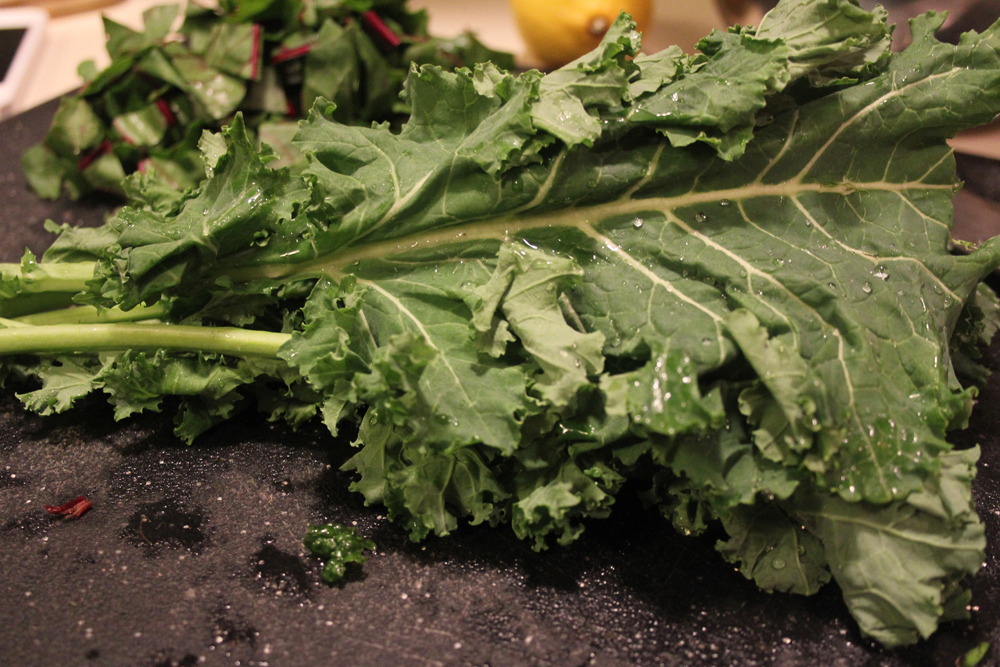
Now wash and pat the kale dry. Separate the leaves from the stems and chop into ribbons.
Check that hot beet out... it truly looks like Love Potion #9 in there!
In a large mixing bowl, combine the kale and beet greens. Drizzle lightly with extra virgin olive oil.
Now squeeze a lemon into the mix. Use just one half of it if you're making 2 servings. Use the whole lemon
if you're feeding a hungry family. At this point you can also sprinkle it with a little sea salt and pepper.
Now massage the mixture for 2-3 minutes until the leaves turn a darker shade of green. The salad will also
shrink a bit in size. Massaging the greens helps to activate more nutrients AND makes the raw greens a little
less bitter and tough.
Your beet is done when you can stick a fork in it easily. Remove it from the saucepan and transfer it to a bowl
of cold water. Gently rub the skin and it will come right off!
Now slice that beautiful beet...
...and add it to your salad. I also added toasted pumpkin seeds but any type of seed would compliment
this salad well (sunflower seeds, pecans, almonds, pine nuts)! Drizzle with your dressing of choice or whisk
the following together for a light yet tasty dressing: 1 shallot finely chopped, 1 1/2 Tbs. olive oil,
1 1/2 Tbs. balsamic vinegar, 1 Tbs. Dijon mustard, 1/2 tsp. garlic powder and sea salt
and black pepper to taste.

Tuesday, December 18, 2012

Brothers From Another Mother: My Favorite Root Vegetables!

Image courtesy of saltandspatula.com
I don't know about you, but I can't walk two feet without running into a cookie... a cake... or a pie. It's that time of the year! Watch out pearly whites, Santa's got a sweet tooth and so do I! 

My mother has been making my favorite holiday cookie (Russian tea cakes) for as long as I can remember. Wait, hold on. I should actually give credit where credit is due, my mother's friend (and former college roommate) Carolyn is actually the one who's been making tea cakes for as long as I can remember.

...my mother just stole the recipe and claimed it as her own.

As lovely as tea cakes are, eating them for breakfast, lunch and dinner is clearly not the best move for optimal health (or desired waistline). Today I'd like to fill you in on a easy (and sneaky) way to curb that holiday sweet tooth... roasted root vegetables!

Now before I lose you to the cookie jar, hear me out. Roasted root vegetables give you that same feeling of satisfaction without leaving your body in crisis mode. When I'm craving something sinful, I just head to the organic produce section for some carrots and parsnips.

Carrots are rich in beta-carotene, which when converted into vitamin A, improves your vision, aids your skin in repair and slows down the aging process throughout your body. Carrots are also high in the carotenoids alpha-carotene and lutein, which have been shown to lower the risk of heart disease. Then to make matters even more spectacular, carrots produce a natural pesticide called falcarinol. Falcarinol protects the carrot's roots from fungal disease but has also been studied for its anti-cancer properties. Lastly, eating carrots stimulates your gums and triggers the production of saliva. The alkalinity of saliva works to counteract the destructive acidic bacteria that can cause cavities!

Image courtesy of jointhereboot.com
Parsnips are just as exciting! If you're not familiar with parsnips, they look like carrots but are usually larger and more creamy in color. They have a nutty sweet taste and contain a bit more potassium than their brother the carrot. Your body uses potassium to control your blood pressure and fight the negative effects of sodium intake on your body. Parsnips also contain more folate than carrots, which you will remember is needed to prevent birth defects in babies and to ensure healthy cell creation and cancer protection throughout life. In addition to potassium and folate, parsnips have both soluble and insoluble fiber, helping to reduce your blood cholesterol and keep your digestive track healthy! And if that wasn't enough already, parsnips are full of vitamin C, which helps you maintain healthy tissue, teeth and gums, while also scavenging your body for cancer-causing free radicals.

On top of all their nutritional benefits, carrots and parsnips are exceptionally delicious when roasted. The process of roasting allows their natural sugars to release, making them sweet as can be! Some people even propose that because they're grown underground, root vegetables can help you feel grounded when you're feeling scatterbrained, confused or 'all over the place'. I know when I eat them, they make me feel calm and peaceful (maybe because they remind me of my grandmother's kitchen and the comfort I felt there). 

Today, I'm sharing my former roommate Katie's recipe for roasted carrots and parsnips (see? I know how to give credit where credit is due). She's one hell of a cook, and this recipe is just too delicious not to share. Thanks, Katie!

Preheat the oven to 350 degrees and gather your ingredients (a bunch of fresh dill, 1 huge parsnip, a small bunch
of carrots, 1 lemon, olive oil, salt and pepper).
Wash and grate the outer, dirty layer off both the carrots and parsnip (especially if they're not organic!). Slice the
carrots in half lengthwise, then in half again, then cut into thirds (you want thin bite size slivers).
Do the same thing for the parsnip. Because it's larger, you'll have to make a few more cuts. You want both vegetable pieces to be similar in size so that they cook at the same rate.
In a large mixing bowl, lightly coat the mixture with extra virgin olive oil or your choice of oil (you'll need just enough
so that they don't burn, around 2 Tbs. or so).
Salt and pepper them to taste and mix well.
Lightly spray a cookie sheet with cooking spray (you won't need much) or line your cookie sheet with parchment paper.
Pour the vegetables over the tray and spread them out as best you can. Roast in the oven for 40-45 minutes total.
While your veggies are roasting, wash and finely chop a few sprigs of dill and cut your lemon open.
After about 20 minutes, flip the veggies and place back into the oven.
You'll know they're done when they start to brown and slightly crisp after about 40-45 minutes. They should have the
texture and consistency of a french fry.
Squeeze half a lemon over each cookie sheet (this recipe makes about 2 sheets worth) and sprinkle with fresh dill.
These roasted veggies make the perfect side dish, or like I said before, can easily substitute for dessert!


Monday, November 26, 2012

Brussels Sprouts: Sinful Little Devils!

Image courtesy of telegraph.co.uk
Ah... Brussel sprouts. They just seem to conjure up bad associations for most people - one of those veggies that your mother made you sit at the dinner table until you finished - and honestly, that is just a shame! They are not horrible at all, nor should they be used as punishment! C'mon, mothers! If you cook them correctly, they can actually taste a little sinful.

Image courtesy of edupics.com
Yes, I said sinful.

They really, really are.

Brussels sprouts originated near (you guessed it!) Brussels. They have always been popular in Europe, but didn't land on the American dinner table until World War I. They're a cold weather crop, growing best in light frost condition, so now is the best time to go sprout hunting at your local grocery store! They look like mini cabbages and are considered a cruciferous vegetable. If you read my recent post on immunity, you'll recall that cruciferous vegetables are some of the most nutritious things you can feed your body.

So what makes this little vegetable such a hit? 

CANCER PROTECTION - Brussels sprouts contain compounds called isothiocyanates, which promote the elimination of carcinogens from the body. These tiny veggies can also help reduce DNA damage. When DNA is damaged, abnormal cells can start to develop - cells that could eventually turn into cancer. Brussels sprouts seem to have special protective qualities when it comes to breast, colon and prostate cancer.

HEALTHY DIGESTION - There are approximately 4 grams of fiber per cup of sprouts. Fiber is important in keeping your digestive system functioning properly and in keeping your blood sugar and cholesterol levels in check.

IMMUNE SUPPORT - You've heard it before but I'll say it again - vitamin C is essential for a strong immune system. Just 1 cup of raw sprouts equals approximately 124% of your Daily Value. It doesn't get better than that! The most nutrients will be maintained by steaming them, but don't worry, you'll still benefit from nutrients no matter how you cook them.

INFLAMMATION REDUCTION - Chronic inflammation is a huge risk factor for many types of illness and cancers. Just 1 cup of raw sprouts contains almost double your Daily Value of vitamin K, which directly regulates your body's inflammatory responses. In addition to this huge job, vitamin K also aids in blood clotting and ensures bone strength.

CELL GROWTH & REGENERATION - Most of us are deficient in folate, a vitamin found naturally in green leafy vegetables. While you can supplement with folic acid, this synthetic version of folate may come with it's own set of concerns. It's important that you focus on meeting adequate folate levels through food, and Brussels sprouts are a great way to do this! Just 1 cup of boiled sprouts meets 25% of your Daily Value. Folate is essential for everyone, but especially crucial during periods of rapid cell division and growth (think 'pregnancy' or 'infancy'). Folate also plays a major role in preventing changes in cells that lead to cancer.

I love vegetables, and the more, the merrier. So today, I'd like to share my recipe for roasted vegetables. This dish is a no-brainer... meaning if you can turn on the oven and chop, you're all set! Even picky eaters will love it!

Grab your ingredients (feel free to improvise here...any veggies will do). I chose Brussels sprouts, asparagus,
cauliflower, mushrooms, a yellow onion and garlic. Preheat the oven to 400 degrees and spray 2 baking pans with a non-stick cooking spray or line with parchment paper.
Finely chop 3-4 cloves of garlic.
Cut the whole yellow onion into large chunks.
Wash and cut your mushrooms into chunks. 
Wash and cut your asparagus into thirds (always cut off and discard of the white or purple end of the stalk. It is too
tough to enjoy!).
Wash your Brussels sprouts, then chop them in half. I make a tiny slit with my knife into the 'tree trunk' end
of the sprout to help it cook more evenly. 
Wash and break your cauliflower into small pieces (this can be done by hand...no need for fancy cutting skills).
Find a big bowl and throw all your ingredients inside.
Now drizzle the mixture with just enough extra virgin olive oil to give the veggies a light coat (probably 3 Tbs. or so
depending on how much you're making). Toss it like you would a salad.
Now grab your army of spices. I use sea salt, black pepper, oregano, basil and red pepper flakes (because
I'm a spice fanatic).
Give the veggies a healthy sprinkle of the spices. Don't get all crazy with the salt... remember, you can always salt later
if you need more! Now spread your mixture onto the baking pans, making sure that
all the veggies have room to breath. No big pile-ups!
And now... the secret ingredient... (drumroll please)... BLACK TRUFFLE OIL! In case you haven't heard, truffle oil
makes everything better! But you don't have to use a lot. Drizzle only about 1/2 tsp. per pan. It may seem inconsequential, but it will do the job!
Bake for 40-45 minutes, until the tops are slightly browned and the veggies (especially the cauliflower)
are cooked through.
This makes a great side or even a snack! It's best eaten right out of the oven!